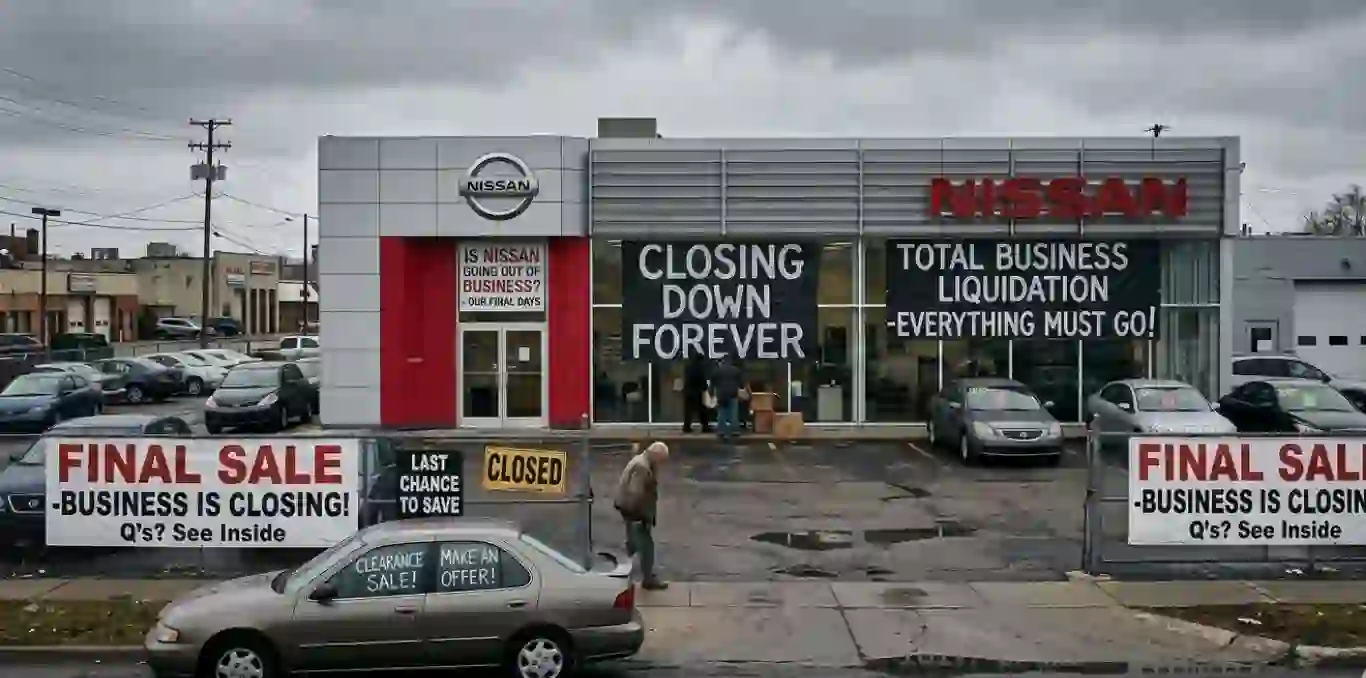
is nissan going out of business
If you have been searching for “is Nissan going out of business,” you are not alone. Millions of Nissan owners and potential buyers are asking the same question right now — and for good reason.
Massive layoffs. Factory closures. Emergency merger talks with Honda. Billions in losses. The headlines are alarming.
I remember sitting in my driveway last year, staring at my Nissan Rogue, wondering the same thing. I had just read about Nissan slashing thousands of jobs, and my mind spiralled into worst-case scenarios. Would my warranty still be honoured? Could I find parts five years from now? Should I trade it in before the value drops further?
So I did what any reasonable person would do. I dug into the numbers, the analyst opinions, the restructuring plans, and the company’s own statements.
Here is everything I found — laid out plainly and honestly.
How Is Nissan Doing Financially Right Now?
Let’s start with the hard facts.
Nissan is still in business. The company is still manufacturing vehicles, operating dealerships worldwide, and selling cars. But “still in business” and “doing well” are two very different things.
As of early 2025, Nissan is navigating one of the most difficult periods in its modern history. The Nissan financial crisis in 2025 is real, and the numbers paint a sobering picture:
- Operating profits dropped dramatically compared to the previous fiscal year.
- Global sales declined across nearly every major market.
- Stock prices fell to levels not seen in decades.
The Nissan sales decline has been sharpest in the United States and China — the brand’s two most critical markets. In the US, models that once dominated their segments are losing ground to Toyota, Hyundai, and Kia. In China, domestic EV brands have seized massive market share from traditional Japanese automakers.
The situation became so alarming that Nissan’s CEO announced emergency restructuring measures in late 2024.
Why Are People Asking “Is Nissan Going Out of Business?”
Several major events hit almost simultaneously, creating a perfect storm of consumer concern.
1. Massive Layoffs and Job Cuts
Nissan announced plans to eliminate approximately 9,000 jobs globally — roughly 6% of its total workforce.
For the people affected, these are not just numbers on a spreadsheet. They represent families and livelihoods. For consumers, Nissan’s layoffs of this scale signal that something is seriously wrong internally.
2. Nissan Is Shutting Down Factories
Alongside the layoffs came announcements about Nissan plant closures. The company confirmed it would reduce global production capacity by roughly 20%.
Several manufacturing facilities worldwide are being consolidated or shut down entirely. The Nissan Rogue and Frontier production cuts hit especially close to home for American buyers, as these are two of Nissan’s best-selling models in the US.
3. The Honda-Nissan Merger Talks
Perhaps the biggest headline was the Honda-Nissan merger discussions. In late 2024 and into 2025, both companies confirmed they were exploring a potential merger or deep strategic partnership.
The talks also involved Mitsubishi, which prompted many people to ask, “Is Mitsubishi going out of business, too?”
When two of Japan’s biggest automakers start discussing combining forces, it tells you the competitive landscape has fundamentally shifted. Nissan’s leadership essentially acknowledged that the company may not survive independently long term.
4. The Nissan-Renault Alliance Unravelling
For over two decades, the Nissan-Renault alliance was one of the auto industry’s most significant partnerships. But that relationship has frayed badly in recent years.
Renault reduced its stake in Nissan, and the two companies have been gradually decoupling operations. Losing that partnership stability left Nissan more financially exposed than ever.
Is Nissan Actually Going to Go Out of Business?
Here is my honest assessment after analysing everything available.
No, Nissan is not going out of business tomorrow, next month, or likely even next year. But the Nissan bankruptcy risk is higher than at any point since the company nearly collapsed in 1999.
Here are the key reasons Nissan will probably survive — at least in some form.
Financial Reserves and Assets
Despite heavy losses, Nissan still holds significant cash reserves and valuable assets. These include manufacturing facilities, intellectual property, and a global dealer network. Companies this large do not simply vanish overnight.
The Honda Partnership
If the merger or partnership with Honda moves forward, it would create one of the largest automotive groups in the world. Nissan would gain access to shared platforms, shared technology, and massive cost savings.
Think of it as a financial life raft with a very powerful engine.
Japanese Government Support
Nissan is one of Japan’s most strategically important companies. The Japanese government has historically shown a willingness to support critical businesses. While nothing formal has been announced, it is widely understood that Japan would not let Nissan simply fail without intervention.
Restructuring Is Already Underway
The Nissan restructuring plan is painful, but it is exactly the type of aggressive action needed to right the ship. The company is:
- Cutting costs aggressively
- Streamlining global operations
- Focusing resources on fewer, more competitive models
The Nissan CEO’s emergency measures are harsh, but they show the company is actively fighting to survive — not passively accepting decline.
Is Nissan Going Out of Business in the US?
This is one of the most commonly searched variations of the question, and it deserves a dedicated answer.
Nissan’s future in the US market is uncertain but not hopeless.
The company still operates a large dealer network across the country. Models like the Rogue, Pathfinder, and Frontier still sell in meaningful numbers. However, Nissan dealership closures have been reported in certain areas, and the brand’s US market share continues to shrink.
The bigger concern for American customers is not whether Nissan will completely leave the US, but whether it will scale back its presence significantly. Fewer models, fewer dealerships, and reduced marketing could make owning a Nissan less convenient over time.
Here is the good news: Even if Nissan dramatically reduced its US operations, the aftermarket parts industry would continue supporting existing vehicles for years — if not decades. Millions of Nissans are on American roads right now. That level of demand ensures parts manufacturers will keep producing components.
What Happens If Nissan Goes Out of Business?
This is the scenario that keeps Nissan owners up at night. Let’s address it directly.
First, understand that major automakers rarely just disappear. When General Motors filed for bankruptcy in 2009, it continued operating. It restructured, emerged stronger, and remains one of the world’s largest automakers today. Chrysler went through a similar process.
If Nissan ever faced a true worst-case scenario, here is what would likely happen.
Nissan Warranty Coverage
In a standard bankruptcy restructuring, existing warranties are typically honoured by the reorganised company. Complete liquidation of a manufacturer of Nissan’s size is extremely unlikely.
Even in that rare scenario, many states have guarantee funds and consumer protection laws that provide backup coverage.
Bottom line: Your Nissan warranty would almost certainly survive any restructuring process.
Parts and Service Availability
- Aftermarket parts manufacturers would continue producing components for popular Nissan models.
- Independent mechanics can service Nissan vehicles without any involvement from the parent company.
- Your local Nissan dealer might eventually become an independent shop or get absorbed into another brand, but the mechanical knowledge and parts availability would remain.
Impact on Resale Value
This is where you would feel the real impact. If Nissan’s situation worsens, resale values for Nissan vehicles will likely drop further.
We have already seen softening in used Nissan prices compared to Toyota and Honda. A bankruptcy or major restructuring would accelerate that trend significantly.
Why Is Nissan Losing So Much Money? Financial Losses Explained
Understanding what went wrong helps you make smarter decisions as a buyer or owner.
Nissan’s financial losses stem from several interconnected problems:
An ageing vehicle lineup. While competitors launched fresh models with cutting-edge technology, Nissan was selling vehicles that had gone years without meaningful updates. The Nissan Altima, once a segment leader, lost ground to the Toyota Camry and Honda Accord. The Frontier went nearly two decades without a major overhaul before its 2022 redesign.
Over-reliance on fleet sales and heavy discounting. This strategy kept sales numbers looking respectable temporarily, but it destroyed the brand’s residual value. When customers learn to expect deep discounts, they stop paying full price. It becomes a race to the bottom.
A stalled EV strategy. Nissan was actually an EV pioneer with the Leaf, which launched in 2010. But instead of building on that early advantage, the company let competitors catch up and surpass them. Tesla, Hyundai, Kia, and even Toyota and Honda now offer more compelling electric options.
Will Nissan Survive 2025?
Based on everything I have researched, yes — Nissan will survive 2025.
The company has enough financial runway to continue operating through its restructuring. The Honda partnership discussions provide a realistic path to long-term stability. And the cost-cutting measures already announced should significantly reduce cash burn.
But surviving and thriving are two very different things.
The Nissan turnaround strategy points toward a leaner, more focused operation. That likely means:
- Fewer models in the lineup
- Fewer factories globally
- A smaller overall footprint than Nissan has maintained in the past
The real question is not whether Nissan survives 2025. It is what kind of company Nissan will become by 2027 or 2030. Will it remain independent? Become a division of a larger Honda-Nissan group? Shrink to a handful of core markets?
All of these outcomes are genuinely possible.
Should You Buy a Nissan Right Now?
This is the most practical question — and one I wrestled with personally when a family member asked for my advice last month.
Here is how I think about it.
If you are getting a great deal, it can still make sense. Nissan dealers are offering significant incentives right now. If you negotiate well, you can get a lot of vehicle for your money. The Rogue, for example, remains a competent, comfortable SUV.
Factor in the total cost of ownership. Expect lower resale value compared to a Toyota or Honda equivalent. If you plan to drive the car for ten years, resale value matters less. If you trade in every three to four years, you will likely take a bigger hit.
Warranty and parts are not short-term concerns. Even in the unlikely event of bankruptcy, your vehicle would still be fully serviceable. Aftermarket support for popular models like the Rogue, Altima, and Frontier is extensive.
If the uncertainty keeps you up at night, buy something else. Peace of mind has real value. Toyota, Honda, Mazda, Hyundai, and Kia all offer excellent alternatives at similar price points. There is absolutely no shame in choosing the option that helps you sleep better.
How Nissan’s Job Cuts Affect the Buyer Experience
One thing that does not get enough attention is how Nissan’s layoffs and restructuring affect everyday buyers and owners.
With fewer employees, you may notice:
- Slower response times from Nissan corporate
- Longer warranty claim processing times
- Declining customer service quality during the transition period
- Extended wait times for service appointments and parts orders
I have heard anecdotal reports from Nissan owners who noticed these issues firsthand. While it is not universal, it is something to factor into your decision if you are currently shopping.
Nissan Has Come Back From the Brink Before
Before you write Nissan off entirely, remember 1999.
The company was drowning in debt, losing money on nearly every car it sold, and was weeks away from potential collapse. Then Renault stepped in. Carlos Ghosn took over and executed one of the most dramatic corporate turnarounds in history. Within three years, Nissan went from near death to record profits.
Is history guaranteed to repeat? Of course not. Today’s competitive landscape is far more challenging than it was 25 years ago.
But Nissan has proven it can fight back when its survival depends on it.
Frequently Asked Questions
Is Nissan going out of business in 2025?
No. Nissan is not going out of business in 2025. The company faces serious financial challenges and has announced major restructuring. However, it has sufficient resources to continue operating. Merger talks with Honda provide an additional safety net.
What happens to my Nissan warranty if the company closes?
In a typical bankruptcy restructuring, warranties are honoured by the reorganised company. Complete liquidation of a major automaker is extremely rare. Even in that unlikely scenario, aftermarket parts and independent service providers would continue supporting Nissan vehicles.
Is the Honda and Nissan merger actually happening?
As of early 2025, Honda and Nissan have confirmed they are in active discussions about a potential merger or strategic partnership. Mitsubishi is also involved in the talks. No final agreement has been announced, and details remain under negotiation.
Should I avoid buying a Nissan because of the financial problems?
Not necessarily. Nissan vehicles remain mechanically sound and come with valid warranties. However, expect lower resale values compared to Toyota and Honda. If you plan to keep the car long term and can negotiate a strong deal, a Nissan can still be a smart purchase.
Is Mitsubishi going out of business, too?
Mitsubishi faces its own challenges and is closely tied to Nissan through their alliance. The company’s future likely depends on the outcome of the Honda-Nissan-Mitsubishi merger discussions. Like Nissan, Mitsubishi is not going out of business immediately but faces an uncertain path forward.
Final Verdict: Is Nissan Going Out of Business?
Not today. Probably not this year. But the company is in a genuine fight for its future.
As someone who has owned multiple Nissan vehicles and genuinely appreciates what the brand has built, I find the current situation more sad than scary. Nissan gave us the legendary Z car, the GT-R, the original Leaf, and millions of reliable everyday vehicles that got families where they needed to go.
The company still has talented engineers, loyal customers, and a brand name that carries global weight. What it needs now is decisive leadership, a compelling product strategy, and probably a strong partner in Honda to share the burden of competing in an industry changing faster than anyone predicted.
If you currently own a Nissan: Take care of it, keep up with maintenance, and do not panic. Your car is not going to stop working because of a corporate restructuring.
If you are thinking about buying one: Do your homework, negotiate hard, and make sure you are comfortable with the trade-offs.
If you just want the straight answer: Nissan is struggling, but it is still standing. The next 12 to 18 months will reveal whether this is a temporary setback or something more permanent.
This article is updated regularly as the situation develops. Bookmark this page and check back for the latest Nissan news.
About the Author



1 thought on “Is Nissan Going Out of Business in 2025? What You Need to Know Now”