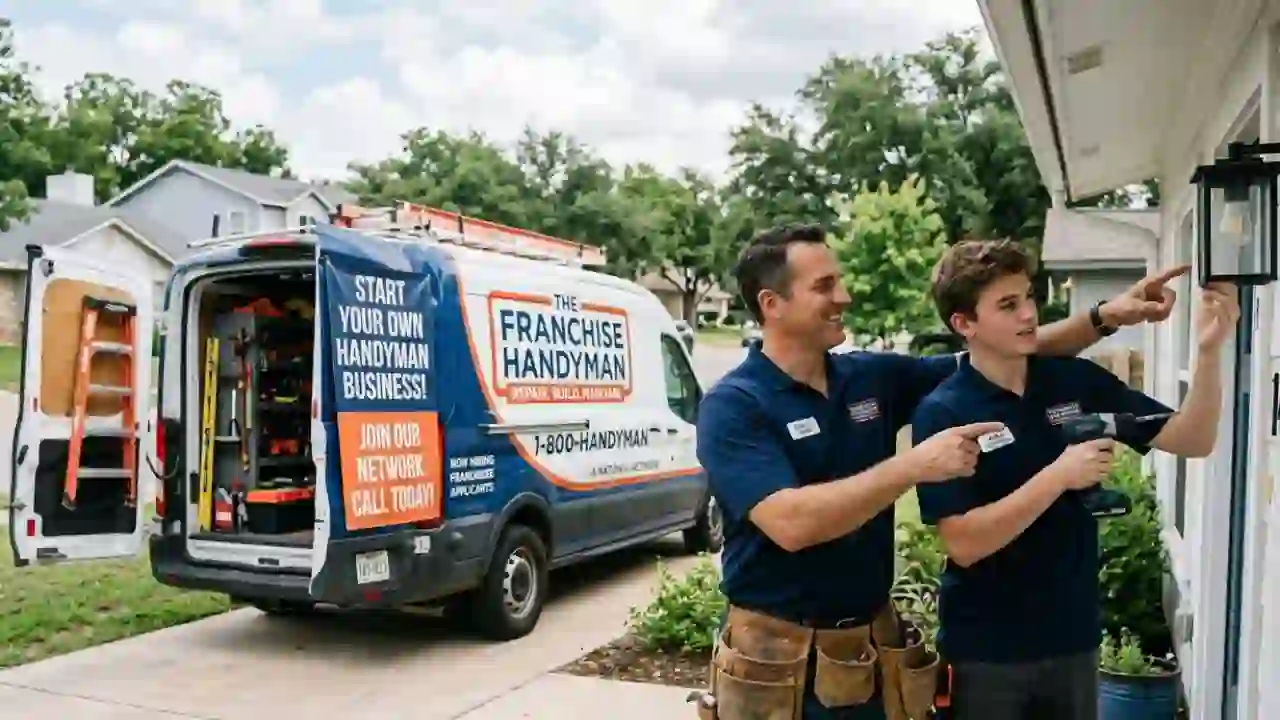
handyman business franchise
I still remember the day my neighbour Dave quit his corporate job. He was tired — tired of the commute, the meetings, the feeling that he was building someone else’s dream.
Six months later, he opened a handyman business franchise in our town. Within two years, he had a team of five technicians, a wrapped van fleet, and the kind of freedom most people only talk about.
That moment stuck with me. It made me dig deep into the handyman franchise model. I spent months researching, talking to franchise owners, attending discovery days, and crunching numbers.
What I found surprised me. This industry is not just about fixing leaky faucets. It is a legitimate, scalable business opportunity that is changing lives.
Whether you are a skilled tradesperson looking to be your own boss or a business-minded entrepreneur searching for a proven model, this guide covers everything you need to know. No fluff. No hype. Just real, practical information you can act on today.
What Is a Handyman Business Franchise?
A handyman business franchise is a licensing arrangement where you purchase the right to operate a home repair and maintenance business under an established brand name. You get the brand, the systems, the training, and the ongoing support. In return, you pay an initial franchise fee and ongoing royalties.
Think of it this way: starting an independent handyman company is like building a house from scratch with no blueprints. Buying a franchise is like getting the blueprints, the materials list, and a team of architects on speed dial.
The home repair franchise opportunity appeals to a wide range of people. Some have decades of trade experience. Others have never picked up a drill. The beauty of the franchise handyman business model is that you do not necessarily need to do the work yourself. You need to run the business.
Most handyman franchise brands provide everything from a comprehensive training program to marketing support, scheduling software, and customer relationship management tools. You focus on building relationships, hiring good people, and growing your territory.
What Are the 4 Types of Franchises?
Before diving deeper, it helps to understand where a handyman franchise fits within the broader franchise landscape. There are four main types of franchise models:
1. Product Distribution Franchises
These focus on selling a manufacturer’s products. Think auto dealerships or gas stations.
2. Business Format Franchises
These provide a complete system for running the business. This is where handyman franchises fall. You get the brand, the operations manual, the training, and the ongoing support structure.
3. Manufacturing Franchises
These give you the right to produce and sell products under the franchisor’s name.
4. Investment Franchises
These require large capital investments, typically in industries like hotels or restaurants.
A handyman service business model falls squarely into the business format category. This is arguably the most supportive type for first-time business owners because you receive a proven roadmap from day one.
How Much Does a Handyman Business Franchise Cost?
Let me be straightforward. The cost varies significantly depending on the brand, your location, and how aggressively you want to launch.
Here is a realistic breakdown based on research across multiple brands:
| Expense Category | Estimated Cost |
|---|---|
| Franchise fee | $40,000 – $70,000 |
| Equipment and tools | $5,000 – $15,000 |
| Vehicle (purchase/lease + branded wrap) | $10,000 – $40,000 |
| Insurance and licensing | $3,000 – $8,000 |
| Initial marketing & grand opening | $5,000 – $15,000 |
| Working capital | $20,000 – $50,000 |
| Total initial investment | $100,000 – $200,000 |
Let me put that in perspective. Compared to a restaurant franchise that might require $500,000 or more, a handyman franchise’s cost is relatively accessible. And because most operate as home-based businesses with mobile service models, you skip the massive overhead of a retail location.
The Mr Handyman franchise cost, for example, falls in the mid-range of these estimates. Other brands like Ace Handyman Services or Handyman Connection have slightly different structures, but the overall investment range is comparable across the industry.
If you are searching for a small handyman business franchise with lower entry costs, brands like TruBlue Total House Care sometimes offer more accessible investment levels, particularly for single-territory agreements.
Are Handyman Franchises Profitable?
This is the question everyone asks first. And honestly, it is the right question.
The short answer is yes, handyman franchises can be very profitable. But let me give you the longer, more honest answer.
Why Handyman Work Is Profitable
The home services industry generates over $600 billion annually in the United States. Several powerful trends are driving this growth:
- Homeowners increasingly prefer to hire professionals rather than tackle repairs themselves
- An ageing housing stock means more maintenance needs every year
- The ageing population is driving demand for accessibility modifications and home upkeep services
- Remote work has increased focus on home improvements
Realistic Profit Margins and Revenue
The typical handyman franchise profit margin ranges from 15% to 30% on services rendered. Established franchise owners often report annual revenues between $300,000 and $1,000,000 or more, depending on market size and team.
Here is where it gets interesting. The handyman franchise ROI and earnings potential improve dramatically after year one.
Most franchise owners I have spoken with describe the first year as an investment year. You are learning the systems, building your customer base, and finding your rhythm. By year two, revenue typically accelerates. By year three, many owners are drawing a comfortable six-figure income.
A Real-World Example
Dave, the neighbour I mentioned earlier, shared his numbers with me over coffee one morning:
- Year 1 revenue: $180,000
- Year 2 revenue: $410,000
- Year 3 revenue: $700,000 (with a net profit margin of about 22%)
Those numbers are real, though results vary based on market, effort, and execution.
Key Factors That Influence Profitability
- Local market size and competition — A territory with 50,000+ households gives you a strong base
- Hiring and retaining skilled technicians — This directly impacts capacity and revenue
- Marketing execution — Both national campaigns and local efforts drive lead flow
- Operational efficiency — Scheduling optimisation and first-call resolution protect margins
- Commercial contracts — Relationships with property managers, HOAs, and real estate agents create recurring revenue
Top Handyman Franchise Brands Worth Considering in 2025
When exploring a handyman franchise for sale, you will encounter several established brands. Each has its own culture, investment level, and support structure.
Here are the most recognised names in the space:
Ace Handyman Services
Formerly Handyman Matters, Ace Handyman Services rebranded after being acquired by Ace Hardware. This partnership gives franchisees access to Ace Hardware’s massive brand recognition and supplier relationships. Their training program is comprehensive, and the Ace name carries significant consumer trust.
Mr. Handyman
Part of the Neighbourly family of home service brands, Mr Handyman benefits from a large franchise network and shared marketing resources. The brand emphasises a professional, uniform technician model. Their systems are well-refined after decades in the business.
Handyman Connection
This brand focuses heavily on matching skilled craftsmen with homeowners. They position themselves slightly higher in the market, emphasising quality and expertise. Handyman Connection offers strong local handyman franchise territory protections and detailed business planning support.
TruBlue Total House Care
TruBlue differentiates itself by targeting both regular home maintenance and senior home modification services. With the ageing population growing rapidly, this dual focus creates a unique market position. Their investment level tends to be slightly lower, making them attractive for first-time franchise owners.
House Doctors
A well-established brand with a focus on home repairs, improvements, and remodelling. House Doctors offers a broad service menu and a proven operating system. They are sometimes available as a handyman franchise for sale in previously established territories, which can offer a faster start.
Handyman Franchise vs. Independent Business: Which Path Is Right?
This is a decision that deserves serious thought. Both paths can lead to success, but they suit different types of people.
Going Independent
Choosing an independent route gives you complete freedom. You name your business, set your prices, choose your services, and answer to nobody.
The handyman company startup cost is typically lower because there are no franchise fees. But you also get no playbook, no brand recognition, and no support network. You figure everything out through trial and error.
Buying a Franchise
Buying a handyman franchise means trading some freedom for structure and support. You follow established systems. You pay ongoing royalties.
But you also get:
- A handyman franchise training program covering hiring, marketing, and financial management
- A recognised brand that customers already trust
- A community of fellow franchisees sharing what works
Who Thrives in Each Model?
In my observation, people with strong business backgrounds but limited trade experience tend to thrive in franchises. The system fills the knowledge gaps.
People with deep trade skills and entrepreneurial instincts sometimes prefer independence because they want full creative control.
There is no universally right answer. But if you are buying a handyman franchise with no experience in either business ownership or the trades, the franchise model significantly reduces your risk.
9 Steps to Owning a Handyman Service Franchise
The process of buying a franchise follows a predictable path. Understanding these steps removes the mystery and helps you plan effectively.
Step 1: Self-Assessment
Be honest about your financial situation, skills, goals, and risk tolerance. Know what you are getting into before you start.
Step 2: Research Brands
Study multiple brands. Read their websites. Look at industry rankings. Focus on the best handyman franchise to buy based on your specific market and situation — not just overall brand popularity.
Step 3: Make Initial Contact
Reach out to two or three franchise brands. A franchise development representative will schedule a call to discuss the opportunity and evaluate mutual fit.
Step 4: Review the Franchise Disclosure Document (FDD)
The FDD contains 23 items of critical information, including financial statements, franchisee obligations, territory rights, and litigation history. Read every word. Hire a franchise attorney to review it with you.
Step 5: Validate With Existing Franchisees
Call existing franchisees listed in the FDD. Ask about their experience, income, challenges, and whether they would do it again. This step is worth more than all the marketing materials combined.
Step 6: Attend Discovery Day
Visit the franchisor’s headquarters. Meet the leadership team. See the support infrastructure firsthand. Get a feel for the culture.
Step 7: Secure Financing
SBA loans, ROBS (Rollover for Business Startups), conventional bank loans, and franchisor financing programs are all options. Some franchisees use a combination.
Step 8: Sign the Agreement and Begin Training
Most handyman franchise training programs last two to four weeks and cover operations, marketing, hiring, technology, and customer service.
Step 9: Launch Your Business
Grand opening marketing, initial customer outreach, and building your first team of technicians mark the beginning of your journey as a home improvement franchise owner.
How to Create Your Handyman Franchise Business Plan
Every successful franchise owner I have met started with a clear business plan. Even though the franchisor provides the system, your business plan maps out the local execution.
A strong handyman franchise business plan should include:
- Market analysis showing demand and competition in your territory
- Financial projections for years one through five
- Hiring timeline for technicians and support staff
- Marketing strategy for the first 90 days
- Personal income goals and milestones
The franchisor typically helps with this process, but owning it yourself creates accountability and clarity.
When Dave built his plan, he set a goal of hiring his first technician within 60 days of launch. He hit that target in 45 days because the plan kept him focused.
Handyman Franchise Cost vs. Return: The Real Math
Let me walk through a realistic scenario based on a $150,000 total initial investment:
| Year | Revenue | Profit Margin | Net Profit |
|---|---|---|---|
| Year 1 | $250,000 | 15% | $37,500 |
| Year 2 | $500,000 | 18% | $90,000 |
| Year 3 | $750,000 | 22% | $165,000 |
Year one profit alone is not enough to live on comfortably, which is why working capital reserves matter.
By year two, you are replacing a decent salary.
By year three, you are earning a high six-figure income — and the business itself has significant resale value. Established handyman franchises often sell for two to three times annual profit, which builds real wealth over time.
These numbers align with what multiple franchise owners have shared with me. They are not guarantees. They are achievable targets for committed, hardworking franchise owners in reasonably sized markets.
Frequently Asked Questions
How Do I Start a Handyman Franchise With No Trade Experience?
Most franchise brands welcome owners without trade backgrounds. You hire skilled technicians to perform the work while you focus on business management, customer relationships, and growth. The franchisor’s training program covers everything you need to run the operation effectively.
What Is the Best Handyman Franchise to Buy in 2025?
The best franchise depends on your budget, market, and goals. Ace Handyman Services, Mr Handyman, and Handyman Connection consistently rank among the top-rated handyman franchise brands. Evaluate each based on franchisee satisfaction, support quality, and territory availability in your area.
What Are the Ongoing Handyman Franchise Fees?
Expect ongoing royalties of 5% to 7% of revenue and advertising fund contributions of 1% to 2% of revenue, in addition to the initial franchise fee and startup investment.
Can I Find a Handyman Business Franchise Near Me?
Most major handyman franchises have territory availability across the United States and Canada. Visit each brand’s website and use their territory availability tools, or contact their franchise development team directly to check availability in your specific area.
What Kind of Support and Training Do Handyman Franchises Provide?
Handyman franchise support and training typically includes an initial multi-week training program, ongoing coaching calls, regional and national conferences, marketing support, technology platforms, and access to a network of fellow franchisees.
How Long Until a Handyman Franchise Becomes Profitable?
Most franchise owners report reaching profitability within 12 to 18 months. Significant income growth typically occurs in years two and three as the customer base expands and operational efficiency improves.
Final Thoughts: Is a Handyman Franchise Right for You?
I have spent considerable time studying this industry, talking to owners, and analysing the numbers. Here is what I know to be true.
A handyman business franchise is not a get-rich-quick scheme. It is a real business that requires real effort, real capital, and real commitment. The first year is hard. You will question your decision at least once. Every franchise owner I have spoken with admits that.
But it is also one of the most accessible paths to business ownership available today:
- The skilled trades franchise investment required is reasonable compared to most franchise categories
- Demand for residential repair franchise services is strong and growing
- The support structure that comes with a proven brand genuinely reduces the learning curve and the risk
Dave told me something last summer that stuck with me. He said owning his franchise was “the hardest easy decision he ever made.” Hard because of the work. Easy because the system showed him exactly what to do.
If you are serious about this path, here is your next move:
- Request information from two or three brands
- Read their FDDs carefully
- Talk to existing owners
- Do the math for your specific market
- Make your decision based on facts, not feelings
The opportunity is real. The question is whether you are ready to grab it.
About the Author



2 thoughts on “Handyman Business Franchise: Costs, Profits & Best Brands”