buy rental property mexico tsalach real estate
Thinking about buying a rental property in Mexico, but not sure where to start?
You’re not alone. Most first-time foreign investors run into the same wall — conflicting advice, vague legal information, and no clear picture of what returns actually look like in real life.
This guide cuts through the noise. It covers the legal requirements, the best cities for rental income, realistic costs, risks to watch for, and exactly how the buying process works — step by step.
If you’re working with or considering Tsalach Real Estate, you’ll also understand why having a specialist in your corner makes a significant difference.
Is Buying Rental Property in Mexico Worth It in 2026?
For most foreign investors, yes — but let’s look at the actual numbers.
Mexico welcomed over 35 million international tourists in 2024. Cities like Tulum, Playa del Carmen, and Puerto Vallarta consistently rank among the top short-term rental markets in Latin America on platforms like Airbnb.
At the same time, long-term rental demand is strong too, driven by a fast-growing expat community and remote workers who’ve relocated to Mexico permanently.
What makes Mexico stand out financially:
- Entry prices are a fraction of comparable coastal markets in the US, Spain, or Portugal
- A well-chosen rental property in Mexico can generate 8% to 15%+ ROI annually
- Short-term vacation rentals in top tourist areas often achieve occupancy rates that rival far more expensive markets
That said, location is everything. Not every Mexican city performs equally well, and choosing the wrong market can turn a good investment into a frustrating one.
Can Foreigners Legally Buy Property in Mexico?
Yes — and this is one of the most misunderstood parts of the whole process.
Foreigners can legally purchase real estate in Mexico. The rules differ slightly depending on where the property is located.
The Restricted Zone
Mexico has what’s called a restricted zone — land within 50 kilometres of any coastline and 100 kilometres of any international border. Foreigners cannot hold direct title to property in these areas.
However, there’s a fully legal solution.
What Is a Fideicomiso?
A Fideicomiso is a bank trust set up specifically for foreign buyers. A Mexican bank holds the legal title on your behalf, while you remain the beneficiary with full rights to use, rent, sell, or transfer the property.
The trust is renewable every 50 years. It is government-approved, widely used, and completely secure when set up correctly.
Outside the restricted zone — such as in Mexico City or inland areas — foreigners can hold direct title without a Fideicomiso, which some investors prefer for simplicity.
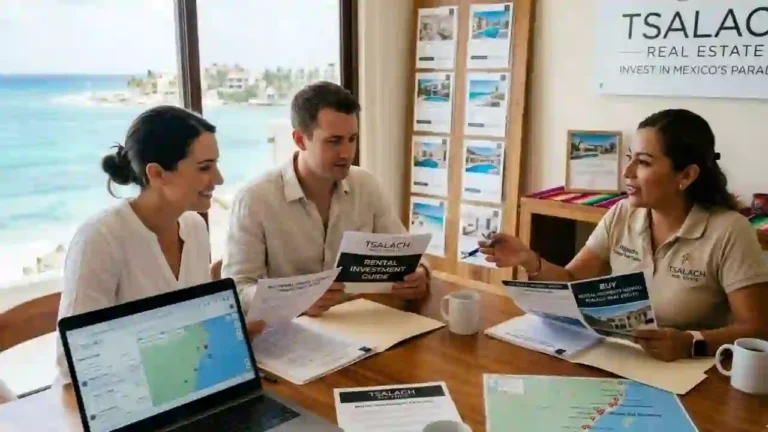
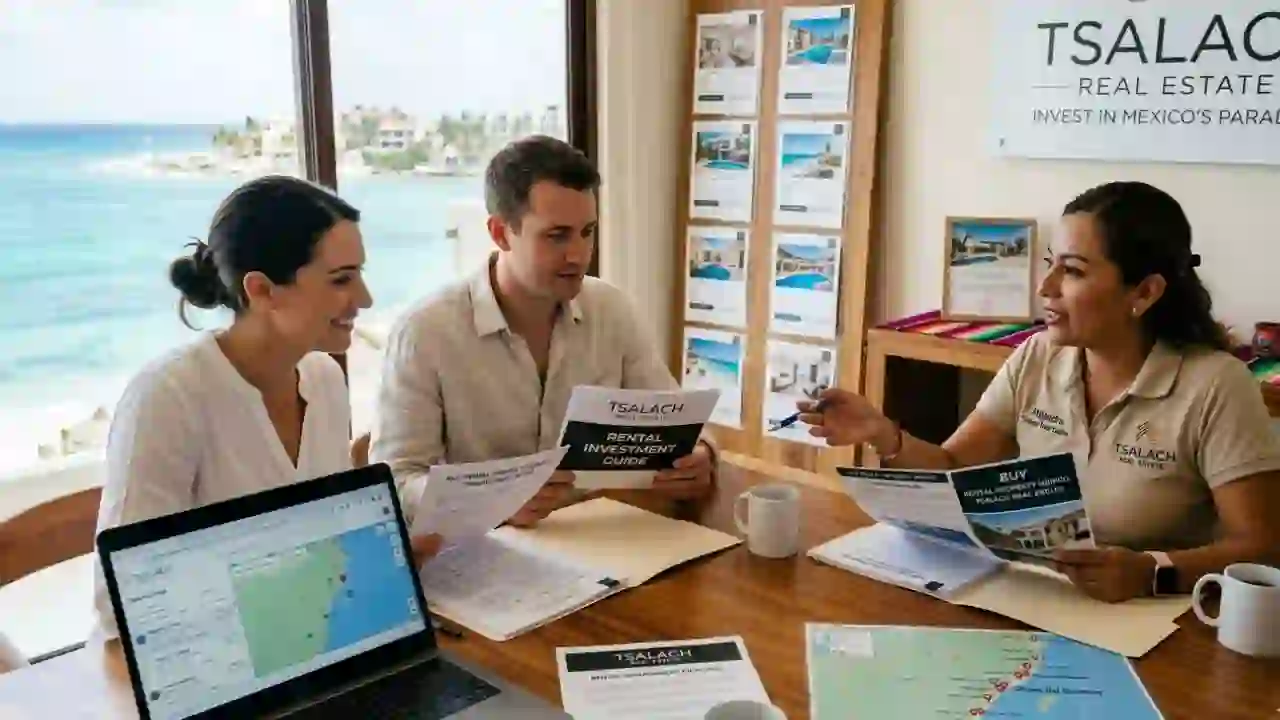
Tsalach Real Estate has guided hundreds of international buyers through this structure and handles the process from start to finish.
Can You Buy a Rental Property in Mexico for $100,000?
Yes, you can, and depending on the market, $100,000 USD can go further than you’d expect.
Here’s a realistic breakdown of what different budgets get you across Mexico’s top investment markets in 2026:
| Budget (USD) | What You Can Typically Buy |
|---|---|
| $80,000 – $120,000 | Studio or small apartment in Mérida, inland cities, or pre-sale units |
| $150,000 – $250,000 | 1–2 bedroom condo in Playa del Carmen, Cancun, or Puerto Vallarta |
| $300,000 – $500,000 | Beachfront or luxury condo in Tulum, Cabo, or Mexico City |
| $500,000+ | Villas, boutique developments, or premium beachfront properties |
Pre-construction (pre-sale) units in high-demand areas are worth paying attention to at the lower end of the budget. They’ve historically appreciated significantly before completion — making them a smart entry point for investors who want coastal exposure without top-dollar pricing.
Best Cities in Mexico to Buy Rental Property
Tulum
Tulum is one of the most talked-about short-term rental markets globally. The eco-luxury atmosphere, cenotes, and boutique culture attract high-spending travellers who skip hotels entirely in favour of private rentals. Gross yields of 12% to 15% are achievable in the right developments.
The catch: supply has grown quickly. Choosing the right property type and having reliable management is more critical here than anywhere else in Mexico.
Playa del Carmen
Playa del Carmen sits between Cancun’s accessibility and Tulum’s exclusivity. It has a large, established expat community, strong year-round tourism, and solid infrastructure. It’s a reliable market for investors who want a mix of short and long-term rental income without paying Tulum prices.
Puerto Vallarta
Puerto Vallarta draws loyal, repeat visitors — particularly North American retirees and snowbirds. Long-term furnished rentals perform especially well here. The city also benefits from a growing LGBTQ+ tourism sector that keeps high-season occupancy consistently strong.
Mexico City (CDMX)
For investors focused on long-term rental income and stability, Mexico City is hard to beat. It’s a global city with millions of professionals, students, and expats competing for well-located apartments. Neighbourhoods like Condesa, Roma Norte, and Polanco maintain very low vacancy rates. Yields are typically 5% to 8% — lower than coastal markets, but significantly more predictable.
Los Cabos
Los Cabos is the luxury end of the Mexico rental market. Premium nightly rates, high-net-worth visitors from the US year-round, and a limited supply of quality inventory drive strong returns for well-positioned properties. Entry prices are higher, but so is the ceiling.
Mérida
Mérida is the emerging market that experienced investors are watching closely. It’s affordable, culturally rich, and is seeing steady growth in both expat residents and tourism. Investors who get in now, before prices climb significantly, stand to benefit from meaningful medium-term appreciation.
Risks of Buying Property in Mexico — and How to Manage Them
Any honest guide covers this. The risks are real, but they’re manageable with the right preparation.
Title and legal risk are the biggest concerns. Some properties in Mexico have unclear title histories, unresolved inheritance disputes, or informal occupation issues. A thorough title search conducted by a qualified notario público is non-negotiable. Tsalach Real Estate always includes proper due diligence in its buying process.
Currency fluctuation can affect your effective returns if your income and costs are in different currencies. Most tourist-area properties are priced and rented in USD, which helps reduce this exposure for many investors.
Property management is critical when you own remotely. Poor management leads to higher vacancy, maintenance problems, and guest issues. Working with a trusted local management company — which Tsalach Real Estate helps you identify — solves this.
Regulatory changes around short-term rentals have evolved in some Mexican cities, similar to what’s happened in Barcelona or Amsterdam. Staying current on local rules in your specific market is important.
Oversupply in certain areas — particularly in Tulum — is worth researching before committing. New developments have launched rapidly, and oversupply in specific price brackets can drag occupancy down. Research current supply levels before making a decision.
How to Buy Rental Property in Mexico: Step-by-Step Process
Step 1 — Define your goals. Are you after rental income, capital growth, personal use, or a combination? Your answer shapes every decision that follows.
Step 2 — Choose your market. Research current occupancy data, average nightly rates, and supply levels in your shortlisted cities. The location guide above is a good starting point.
Step 3 — Connect with Tsalach Real Estate. Get expert guidance early. They understand the legal landscape, have vetted listings across Mexico’s top markets, and set realistic expectations about returns.
Step 4 — Identify the right property. Evaluate listings based on rental yield, location within the city or resort area, build quality, and management availability.
Step 5 — Sign a Promesa de Compraventa. This is a promise-to-purchase agreement that locks in the price and terms while due diligence is completed.
Step 6 — Complete due diligence. Your notario conducts a title search, confirms there are no liens or encumbrances, and verifies the legal status of the property.
Step 7 — Set up your Fideicomiso (if purchasing in a restricted zone). This involves selecting a Mexican bank to act as trustee. Tsalach Real Estate can recommend reputable banks and manage the paperwork.
Step 8 — Close and transfer ownership. Closing is handled by the notario. Budget 4% to 8% of the purchase price for closing costs, covering notary fees, transfer taxes, and registration.
Step 9 — Set up your rental operation. Establish your strategy — Airbnb, a local management company, or both — and get your property generating income.
Taxes on Mexico Rental Property Income
Understanding your tax obligations before you buy is essential.
Foreign property owners generating rental income in Mexico are subject to Mexican income tax (ISR). The standard withholding rate for non-residents is 25% of gross rental income. If you file as a Mexican tax resident, you may be able to deduct expenses and pay a lower effective rate.
US citizens must also report Mexican rental income to the IRS. The US-Mexico tax treaty helps prevent double taxation in most situations.
VAT (IVA) at 16% may apply to short-term rentals — particularly for stays under one month. Tsalach Real Estate works with qualified Mexican tax advisors who help investors structure their ownership and rental operation efficiently from day one.
Financing Options for Foreign Buyers in Mexico
Cash purchases are the most common route for foreign investors. Traditional Mexican bank mortgages are difficult for non-residents to access and typically carry higher interest rates than buyers are used to at home.
That said, options do exist:
Developer financing on pre-construction properties is popular — often 30% to 50% down, with the balance paid in instalments over the construction period. This lets investors spread their capital outlay over time.
Cross-border financing — using a US or Canadian home equity line of credit — is another strategy some investors use to fund their Mexico purchase without liquidating other assets.
Tsalach Real Estate can walk you through the financing options that apply to your situation and budget.
Why Work with Tsalach Real Estate?
There’s no shortage of real estate agents operating in Mexico’s tourist markets. What sets Tsalach Real Estate apart is specialisation.
They work exclusively with foreign investors navigating Mexico’s property market. That means they understand the legal nuances that trip up buyers, the real performance differences between cities, and how to set honest expectations about returns.
Their buyers consistently highlight end-to-end support: from initial market education and property search, through legal structuring, closing, and post-purchase rental setup. When you’re buying in a foreign country, that continuity matters.
Frequently Asked Questions
Is Tsalach Real Estate a legitimate agency for buying property in Mexico? Yes. Tsalach Real Estate is a specialist firm focused on guiding foreign investors through the Mexican property market. They work with qualified notarios, legal professionals, and property managers to ensure a compliant, smooth process.
What legal requirements do foreigners need to buy property in Mexico? You’ll need a valid passport, a Mexican tax ID number (RFC) for the transaction, and a Fideicomiso bank trust if buying in a coastal or border restricted zone. A notario público handles the legal transfer and title verification.
What is a realistic ROI on Mexico rental properties in 2026? Short-term vacation rentals in high-demand coastal markets like Tulum or Los Cabos can generate 10% to 15% gross yields. Long-term rentals in Mexico City typically return 5% to 8%. Net returns depend on management fees, taxes, and occupancy rates.
Can I manage my Mexico rental property remotely? Yes. Many foreign owners manage entirely remotely using local property management companies and platforms like Airbnb. Tsalach Real Estate helps buyers connect with reliable local management partners.
What are the total costs to buy a rental property in Mexico? Beyond the purchase price, budget 4% to 8% for closing costs — notary fees, acquisition tax, and registration. If setting up a Fideicomiso, expect a setup fee of around $1,000 to $1,500 USD and an annual trust fee of roughly $500 to $700 USD.
Final Thoughts
Buying rental property in Mexico is one of the most accessible and potentially rewarding real estate investment strategies available to foreign buyers today.
Affordable entry prices, strong rental demand in key tourist markets, and a legal framework that genuinely supports foreign ownership make Mexico stand out against comparable markets globally.
The risks are real but manageable. A clear title, proper legal structuring through a Fideicomiso, and reliable property management eliminate the majority of problems that catch uninformed buyers off guard.
Tsalach Real Estate exists to make this process work for international investors — from choosing the right city and property, through legal structuring, rental setup, and understanding your tax obligations.
If you’re serious about building rental income from Mexico real estate, the best next step is a direct conversation with the Tsalach Real Estate team.
About the Author