
Let’s be honest. When most people think about starting a business, they think about selling clothes online or opening a coffee shop.
But you aren’t most people. You like heavy machinery. You like working outdoors. And you know a secret that most people miss: Dirt is profitable.
Every time a new house, shopping mall, or farm is built, the land needs to be cleared first. Trees need to be removed, stumps need to be ground down, and rocks need to be hauled away. Before the architect draws a single line, the land clearing crew has already made money.
In 2026, the demand for land clearing is exploding. With the real estate market expanding into rural areas and farmers needing more usable land, this is a recession-proof industry.
If you are not afraid of getting your boots muddy, starting a Land Clearing Business might be the best decision you ever make. But it’s not as simple as buying a chainsaw and a truck. It requires planning, permits, and the right equipment.
In this guide, I’m going to walk you through exactly how to start, what gear you actually need (vs. what salesmen try to sell you), and how to land your first paying client.
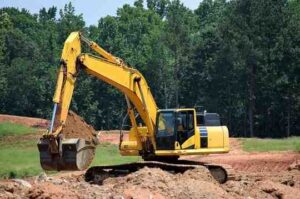
Step 1: Know What You Are Getting Into
Before you spend a single dollar, you need to understand the business model.
Land clearing isn’t just chopping down trees. It’s about Site Preparation.
What services will you offer?
- Forestry Mulching: Turning trees and brush into mulch on-site. This is huge in 2026 because it’s eco-friendly and fast.
- Stump Grinding: Removing the leftover stump so the ground is flat.
- Right-of-Way Clearing: Clearing paths for power lines or pipelines.
- Residential Clearing: Preparing a backyard for a swimming pool or a new garage.
My Advice: Don’t try to do everything at once. Start with Residential Clearing or Forestry Mulching. These niches have lower barriers to entry and plenty of customers.
Step 2: The “Boring” But Crucial Paperwork
I know, you want to buy the big machines. But if your paperwork isn’t right, your business is a ticking time bomb.
1. Form Your Business Entity
Don’t operate as a “guy with a truck.” Form an LLC (Limited Liability Company).
Why? Because land clearing is dangerous. If a tree falls on a client’s roof, you want them to sue the LLC, not you personally. An LLC protects your house and savings.
2. Get Licensed
Check with your local county clerk. Do you need a specific contractor’s license? In some states, clearing land falls under “landscaping,” while in others, it’s “construction.” Know the rules.
3. Insurance is Non-Negotiable
This is the most dangerous industry after logging. You need:
- General Liability Insurance: Covers damage to client property.
- Equipment Insurance: If your $60,000 Skid Steer gets stolen, this saves you.
- Workers’ Comp: If you hire help, this is mandatory.
Step 3: The Gear (What You Actually Need)
This is where beginners go broke. They buy brand new, massive bulldozers they don’t need.
In 2026, the trend is Compact & Efficient.
The Starter Kit:
- Skid Steer / Compact Track Loader: This is the Swiss Army Knife of land clearing. It’s small enough to fit in backyards but powerful enough to push trees. (Brands like Cat, Bobcat, or Kubota are solid.)
- Mulching Head Attachment: This attaches to your Skid Steer. It eats brush and small trees instantly.
- Grapple Bucket: For picking up logs and rocks.
- Chainsaws: Get two professional-grade saws (Stihl or Husqvarna). One big, one small.
- Truck & Trailer: You need a heavy-duty truck (like a Ford F-250 or Chevy 2500) and a trailer rated to carry your Skid Steer.
Rent or Buy?
For your first 3 jobs, RENT.
Don’t drop $80,000 on a machine until you have cash flow. Rental allows you to test different machines and see what you like. Once you are booked for 3 months straight, then buy.
Step 4: Pricing Your Services (Don’t Undercharge!)
New business owners often undercharge to get work. This is a trap.
Land clearing destroys equipment. You need to charge enough to cover repairs, fuel, and your time.
How to Charge:
- Per Hour: Good for small, unpredictable jobs. (e.g., $150 – $250 per hour for machine work).
- Per Acre: Standard for large lots. (e.g., $1,500 – $4,000 per acre depending on tree density).
- Per Project: “I’ll clear this backyard for $2,500 flat.”
Pro Tip: Always walk the land before quoting. Photos lie. A “flat field” might be a swamp that will trap your machine. Always inspect in person.
Step 5: Marketing (Getting the Phone to Ring)
You have the gear. You have the LLC. Now, how do you find customers?
In 2026, word-of-mouth is great, but digital presence is king.
1. Google Business Profile (The Holy Grail)
When someone types “Land clearing near me,” you want to show up on Google Maps. It’s free. Get verified. Ask your first few clients to leave 5-star reviews. This is worth more than gold.
2. Facebook Groups
Join local community groups. Search for keywords like “overgrown yard” or “clearing land.” Reply to people looking for help. Post “Before and After” photos of your work. Nothing sells land clearing better than a satisfying transformation photo.
3. Meet the “Gatekeepers”
Who hires land clearers?
- Real Estate Agents (selling land).
- Custom Home Builders.
- Fence Installers.
Go shake their hands. Give them your card. Tell them, “If you need a lot cleared fast, I’m your guy.”
Step 6: Managing the Job (The Execution)
You got the job. Now, don’t mess it up.
Safety First:
Before you start, call 811 (Dig Safe). They will mark underground utility lines (gas, water, electric). Hitting a gas line won’t just ruin your day; it could blow up the neighbourhood.
Debris Management:
What do you do with the trees?
- Mulch them: Leave it on site (good for soil).
- Burn them: Only if legal in your area.
- Haul them: Expensive, but sometimes necessary.
Communication:
Send the client a text update every evening. “Cleared the front acre today. Tackling the stumps tomorrow.” Clients love communication. It builds trust and leads to referrals.

Step 7: Scaling Up (Growing the Empire)
Once you are fully booked, it’s time to grow.
- Hire an Operator: Find someone who treats the machine as well as you do.
- Buy a Second Machine: Maybe a mini-excavator for digging roots.
- Diversify: Offer “Grading” (levelling the dirt) or “Gravel Driveway Installation.” You are already there with the equipment; why not upsell?
Common Pitfalls to Avoid
- Buying too much equipment too soon. Cash flow kills businesses, not lack of tools.
- Ignoring maintenance. Grease your machine every single day. A breakdown costs thousands in repairs and lost time.
- Taking jobs you can’t handle. Don’t try to clear a 50-acre forest with a small skid steer. You will destroy your machine. Know your limits.
Conclusion: Is it Worth It?
Starting a land clearing business is hard work. It’s hot, dusty, and loud.
But it is also incredibly satisfying. At the end of the day, you look back and see a clean, beautiful piece of land where there used to be a jungle.
And financially? It’s a powerhouse. With low competition in many areas and high hourly rates, a solo operator can easily make $100,000+ a year if they hustle.
So, if you are ready to trade the office chair for a joystick, 2026 is the year to do it. The land is waiting. Go clear it.
FAQ: Questions Beginners Ask
Q1: How much money do I need to start?
A: If you rent equipment, you can start with $5,000 – $10,000 (for insurance, LLC, marketing, and rental deposits). If you buy a used machine and truck, you are looking at $60,000+. Start small.
Q2: Do I need a CDL (Commercial Driver’s License)?
A: It depends on the weight of your truck + trailer + machine. If the Gross Combined Weight Rating (GCWR) is over 26,000 lbs, yes, you need a CDL. For smaller setups (F-250 + Skid Steer), you usually don’t. Check your state laws.
Q3: Is winter a slow season?
A: Yes and no. In the north, frozen ground is hard to work on. In the south, winter is actually the best time because the brush is dead and there are fewer bugs/snakes. Plan your cash flow for slow months.
Q4: Can I do this alone?
A: Yes, many operators are “One-Man Bands.” But having a helper on the ground with a chainsaw makes the machine work 2x faster. It’s usually worth paying a helper.
(Disclaimer: This guide is for informational purposes only. Always consult with a financial advisor and legal expert before starting a business.
Links:-